Showing posts with label Happy Birthday. Show all posts

Tuesday

Happy Birthday - John Calvin


John Calvin was born on this day in 1509. I took a class at Trinity Evangelical Divinity School on Calvin's theology and was able to interact with many different works by and about him. Some of these were,
Calvin: A Sixteenth Century Portrait, by William J. Bouwsma
A Defense of the Secret Providence of God, by John Calvin (Out of Print)
The Institutes of the Christian Religion, by Calvin
The Grace of God and the Will of Man, ed. by Clark Pinnock
The Providence of God, Paul Helm
Calvin on Scripture and Divine Sovereignty, John Murray
Calvin, Francois Wendel. (Out of Print)

I would recommend any of them (the Wendel biography is a bit dry, though - but also out of print).
Also good websites are,
Wikipedia
Christian Classics Ethereal Library
Calvinism Resources Database
The Hekman Library (Calvin College, Grand Rapids, Mi)

Thursday

Happy Birthday - Karl Barth

Karl Barth(pronounced "Bart") was a 20th century Swiss theologian in the Reformed tradition. A vigorous opponent of theological liberalism and modernism, he is known as "the Father of Neo-Orthodoxy".
Early life and education
Karl Barth was born in Basel, Switzerland and spent his early years growing up in Bern where his father taught at the university. Barth began his studies in Bern in 1904 where he was introduced to Kant, whose Critique of Practical Reason he called 'the first book that really moved me as a student'. Barth went on to study at Berlin, a center of Protestant liberalism, later studying at Tübingen and finally in Marburg in 1908. While at Marburg, Wilhelm Herrmann had a great influence on Barth. After Marburg, Barth spent ten years (1911 - 1921) as a pastor. This had a profound impact on his theology as "Barth's liberal assurances were initially undermined by his exposure to the Swiss social democratic movement... The outbreak of the Great War further disillusioned him... most of his former teachers signed a declaration of support for the Kaiser [in support of Hitler]." Barth described his experience:

An entire world of theological exegesis, ethics, dogmatics, and preaching, which up to that point I had accepted as basically credible, was thereby shaken to the foundations, and with it everything which flowed at that time from the pens of the German theologians.

Barth returned to Scripture, especially studying the Romans in 1916 which resulted in his commentary, first published in 1919. His commentary resulted in a new-found prominence in Germany.

As a result, Barth was offered a position as Honorary Professor of Reformed Theology in Göttingen. Teaching at Göttingen from 1921 - 1925, he later held posts at Münster (1925–1930) and Bonn (1930–1935). Other key points involve Barth's first (and later abandoned) volume of the Christian Dogmatics (1927), his study of Anselm (1930), the first volume of the Church Dogmatics (1932), his debate with Emil Brunner over natural theology, the Barmen Declaration of 1934, and his travel to Rome in 1966 to talk with those involved in the Second Vatican Council among many other things. Barth retired at the end of the winter semester of 1961-62, and his health began to decline in 1964. Barth passed away on December 10th, 1968.

Theological perspectives
It has been said that "a 'Barthian theology' is just as impossible as an 'Einsteinian science', but just as there is a pre-Einsteinian science and a post-Einsteinian science, so there is a pre-Barthian and post-Barthian theology, for the contribution of Karl Barth to theology is, like that of Albert Einstein to nature science, so deep-going and fundamental that it marks one of the great eras of advance in the whole history of the subject"
From Theopedia

Also visit these sites for more information on Barth-
Wikipedia
faithnet.org.uk
Here
Time Magazine Cover Story, Apr. 20, 1962

Saturday

Happy Birthday - A.W. Tozer

When and Where: Aiden Wilson Tozer (April 21, 1897 - May 12, 1963) was an pastor, preacher, author, magazine editor, Bible conference speaker, and spiritual mentor. A.W. Tozer became a pastor when he was 22. He spent most of his career at Southside Alliance Church in Chicago, where he served 31 years.
Style: Tozer was a man of prayer who wholeheartedly strove to make worship a major part of his everyday life. It has been said that he spent more time on his knees than at his desk. In addition to his lifelong love of prayer, he was also very fond of words. His sermons and published pieces are filled with beautifully written sentences that go way beyond mere thoughts haphazardly thrown out for review...they are carefully, creatively constructed reflections of the charm, wit, and authenticity that made him famous. The man was a creative, spiritual genius!
Noteworthy Accomplishments: The epitaph on his tombstone in Akron, OH, sums it up best: "A man of God." His very real, authentic faith was indeed his greatest accomplishment and contribution to the world. Though he didn't have a formal theological education, he was a marvelous pastor and served as editor of Alliance Life, the Christian & Missionary Alliance's denominational newsletter. He also authored more than 40 books, the two most famous being The Knowledge of the Holy and The Pursuit of God.
Timeless Wisdom: Don't settle for a mediocre Christian life when you could have something so much more vibrant and alive. An authentic, active relationship with Christ takes work, but the return on the investment of time and self is more than you could ever imagine.

From the book 20 Things You Should Read.
For more visit his Wikipedia page here and this website.

Wednesday

Happy Birthday - St. Teresa of Avila

Teresa was born in Avila, Spain on 28 March, 1515. St. Teresa was soft-hearted and mystic. Some believe her life's story is greatly exaggerated, but others hold on to her story as truth. St. Teresa is known for her writings, including The Way of Perfection and Interior Castle. While Luther & Calvin played influential roles in the Protestant Reformation, St. Teresa was a leader in the Counter-Reformation within the Catholic Church. St. Teresa's life was marked by prayer and learning to love God and others - timeless wisdom about Christian living basics.

You can't help but love the dedication of nuns. Maybe it's that all of them seem to beam from ear to ear with compassion. Or maybe it's simply because they're in the business of serving Jesus Christ. Most ordinary people just aren't that content, happy, or sincere.
Before entering the convent, most nuns have to study the lives of influential people from the past. Many of those aspiring nuns learn a great deal about St. Teresa of Avila, one of the most famous nuns in the history of the Catholic Church. Non-Catholics might recall learning about St. Teresa while studying Christian history in church or school. It is her words here that usually move people to want to know more about this great Christian conqueror:

Christ has no body now on earth but yours,
no hands but yours, no feet but yours;
yours are the eyes through which Christ's compassion looks
out on the world,
yours are the feet with which He is to go about doing good
and yours are the hands with which He is to bless us now.

These simple words are quite intriguing when you consider that St. Teresa lived a very humble and modest life. In other words, this nun lived what she preached. It doesn't take long to discover that St. Teresa was quite the ambassador for Christ in sixteenth-century Europe.

- from 20 Things You Should Read. Written by Matthew Paul Turner.
for more, visit St. Teresa's Wikipedia page.

Saturday

Happy Birthday - Fanny Crosby

Fanny Crosby is one of my favorite hymn writers. She was born on this day, 24 March 1820. She was blind from birth, but still managed to write prolifically - both hymns and poetry. If you would like to learn more about Fanny, you can visit her Wikipedia page, this site, offering many different links or this fine book on her life.
The following is one of my all-time favorite hymns. The Rich Mullins rendition is especially good.

All The Way My Savior Leads Me

All the way my Savior leads me
What have I to ask beside
Can I doubt His faithful mercies
Who through life has been my guide
Heavenly peace, divinest comfort
ere by faith in Him to dwell
for I know whatever fall me
Jesus doeth all things well

All of the way my Savior leads me
and He cheers each winding path I tread
gives me strength for every trial
and He feeds me with the living bread
and though my weary steps may falter
and my soul a thirst may be
gushing from a rock before me
though a spirit joy I see

And all the way my Savior leads me
oh the fullness of His love
perfect rest in me is promised
in my Father's house above
when my spirit clothed immortal
wings its flight to realms of day
this my song through endless ages
Jesus led me all the way

Friday

Happy Birthday - Philipp Melanchthon

Philipp Melanchthon (February 16, 1497 - April 19, 1560) was a German professor and theologian, a key leader of the Lutheran Reformation, and a friend and associate of Martin Luther.

Melanchthon's importance for the Reformation lay essentially in the fact that he systematized Luther's ideas, defended them in public, and made them the basis of a religious education. These two, by complementing each other, could be said to have harmoniously achieved the results of the Reformation. Melanchthon was impelled by Luther to work for the Reformation; his own inclinations would have kept him a student. Without Luther's influence Melanchthon would have been "a second Erasmus," although his heart was filled with a deep religious interest in the Reformation. While Luther scattered the sparks among the people, Melanchthon by his humanistic studies won the sympathy of educated people and scholars for the Reformation.

As a Reformer Melanchthon was characterized by moderation, conscientiousness, caution, and love of peace; but these qualities were sometimes said to only be lack of decision, consistence, and courage. Often, however, his actions are shown steming not anxiety for his own safety, but from regard for the welfare of the community, and for the quiet development of the Church.

A trait of his character was his love of peace. He had an innate aversion to quarrels and discord; yet, often he was very irritable. His irenical character often led him to adapt himself to the views of others, as may be seen from his correspondence with Erasmus and from his public attitude from the Diet of Augsburg to the Interim. It was said not to be merely a personal desire for peace, but his conservative religious nature, that guided him in his acts of conciliation. He never could forget that his father on his death-bed had besought his family "never to leave the Church." He stood toward the history of the Church in an attitude of piety and reverence that made it much more difficult for him than for Luther to be content with the thought of the impossibility of a reconciliation with the Roman Catholic Church. He laid stress upon the authority of the Fathers, not only of Augustine, but also of the Greeks.

As a scholar Melanchthon embodied the entire spiritual culture of his age. At the same time he found the simplest, clearest, and most suitable form for his knowledge; therefore his manuals, even if they were not always original, were quickly introduced into schools and kept their place for more than a century.

Knowledge had for him no purpose of its own; it existed only for the service of moral and religious education, and so the teacher of Germany prepared the way for the religious thoughts of the Reformation. He is the father of Christian humanism, which has exerted a lasting influence upon scientific life in Germany.

As a theologian, Melanchthon did not show so much creative ability, but rather a genius for collecting and systematizing the ideas of others, especially of Luther, for the purpose of instruction. He kept to the practical, and cared little for connection of the parts, so his Loci were in the form of isolated paragraphs.

Melanchthon's formulation of the authority of Scripture became the norm for the following time. The principle of his hermeneutics is expressed in his words: "Every theologian and faithful interpreter of the heavenly doctrine must necessarily be first a grammarian, then a dialectician, and finally a witness." By "grammarian" he meant the philologist in the modern sense who is master of history, archaeology, and ancient geography. As to the method of interpretation, he insisted with great emphasis upon the unity of the sense, upon the literal sense in contrast to the four senses of the scholastics. He further stated that whatever is looked for in the words of Scripture, outside of the literal sense, is only dogmatic or practical application.

Melanchthon's humility and modesty had their root in his personal piety. He laid great stress upon prayer, daily meditation on the Word, and attendance of public service. In Melanchthon is found not a great, impressive personality, winning its way by massive strength of resolution and energy, but a noble character hard to study without loving and respecting.

Taken from Wikipedia article. To read the entire article, go here.

Sunday

Happy Birthday - Dietrich Bonhoeffer

Dietrich Bonhoeffer (February 4, 1906 – April 9, 1945) was a German Lutheran pastor, theologian and participant in the German resistance movement against Nazism and founding member of the Confessing Church. He was involved in plots planned by members of the Abwehr (the German Military Intelligence Office) to assassinate Adolf Hitler. He was arrested in March 1943, imprisoned and eventually hanged, just before the end of the Second World War in Europe.

Bonhoeffer was born in Breslau, Germany (now Wrocław, Poland) into a middle to upper-class professional family. He and his sister Sabine were twins and the sixth and seventh of eight children. His father, Karl Bonhoeffer, was a prominent German psychiatrist in Berlin; his mother, Paula, home-schooled the children. Though he was initially expected to follow his father into the field of psychology, Dietrich decided at an early age to become a minister. His parents supported his decision. He attended college in Tübingen, where he received his doctorate in theology from the University of Berlin. As Dietrich was just 24 at this time, he was unable to be ordained [one must be 25 by church regulations]. This however, gave Dietrich the opportunity to go abroad. He then spent a post-graduate year abroad studying at Union Theological Seminary in New York City. During this time, he would often visit the Abyssinian Baptist Church in Harlem, where he became acquainted with the musical form that ethnomusicologists call the African-American Spiritual. He amassed a substantial collection of these spirituals, which he took with him back to Germany.

Bonhoeffer returned to Germany in 1931, where he lectured on theology in Berlin and wrote several books. A strong opponent of Nazism, he was involved, together with Martin Niemöller, Karl Barth and others, in setting up the Confessing Church. Between late 1933 and 1935, he served as pastor of two German-speaking Protestant churches in London: St. Paul's and Sydenham. He returned to Germany to head an illegal seminary for Confessing Church pastors, first in Finkenwalde and then at the von Blumenthal estate of Gross Schlönwitz, which was closed on the outbreak of war. The Gestapo also banned him from preaching; then teaching; and finally any kind of public speaking. During this time, Bonhoeffer worked closely with numerous opponents of Adolf Hitler.

During World War II, Bonhoeffer played a key leadership role in the Confessing Church, which opposed the anti-semitic policies of Adolf Hitler. He was among those who called for wider church resistance to Hitler's treatment of the Jews. While the Confessing Church was not large, it represented a major source of Christian opposition to the Nazi government in Germany.

In 1939, Bonhoeffer joined a hidden group of high-ranking military officers based in the Abwehr, or Military Intelligence Office, who wanted to overthrow the National Socialist regime by killing Hitler. He was arrested in April 1943 after money used to help Jews escape to Switzerland was traced to him. He was charged with conspiracy and imprisoned in Berlin for a year and a half. After the unsuccessful July 20 Plot in 1944, Bonhoeffer's connections to the conspirators were discovered. He was moved to a series of prisons and concentration camps ending at Flossenburg. Here, he was executed by hanging at dawn on 9 April 1945, just three weeks before the liberation of the city. Also hanged for their parts in the conspiracy were his brother Klaus and his brothers-in-law Hans von Dohnanyi and Rüdiger Schleicher. (from Wikipedia)

For some of his best works see NextStep Resources:
Life Together
Ethics
The Cost of Discipleship
Christ the Center

Tuesday

Happy Birthday - Francis Schaeffer

In Philadelphia in the late 1920's, a young teenage boy decided that he didn't need God. He had tried church, & it didn't give him the answers he was looking for.
After a time of living as a self-proclaimed agnostic, he decided to read the Bible, & see for himself if God exists. Within six months, he was convinced that God is real & that the Bible is His revealed Word to mankind. In 1930, eighteen-year-old Francis Schaeffer prayed to receive Christ as his Savior.
From that day, Schaeffer was passionately committed to the proclamation & rational defense of the Gospel. One of the foremost Christian thinkers & apologists of this century, he wrote 24 books, which have been translated into more than 20 languages. Schaeffer's basic message was the same - God's Word is the only guide man needs to interpret his past & solve contemporary problems.
When Schaeffer graduated from Faith Theological Seminary in 1938, the United States faced many perplexing new social & religious problems. The evangelical movement was threatened by encroaching liberal ideologies, which argued that the Bible is not a reliable source of truth. He & his wife Edith, were both eager for opportunities to speak out in defense of conservative doctrine.
As a pastor, Schaeffer was grieved at the compromise he saw in many mainline Protestant denominations. Then, in the late 1940's, he toured Europe on behalf of the American Council of Christian Churches. To his astonishment, he saw even greater needs there & moved to Switzerland to work with youth, founding the Children for Christ ministry in 1948 in Lausanne. In 1951, Schaeffer wasn't sure where God was leading him, & questioned his convictions. He remembers, "I felt a strong burden to stand for the historical Christian position, & for the purity of the visible church. As I rethought my reasons for being a Christian, I saw again that there were totally sufficient reasons to know that the infinite-personal God does exist & Christianity is true."
But what was the best way to reach cultures so closed to God's Word? Schaeffer was convicted to start right where he lived in Switzerland. In 1955, he formally opened his chalet in Huemoz as a "home" for solid Bible teaching, where anyone could come & listen to thought-provoking analysis of Scripture. This haven of spiritual rest and discovery was named L'Abri.
Throughout the remainder of the 50's & 60's when authority & "the establishment" were most severely questioned, L'Abri drew thousands of visitors. Dr. Harold Brown says, "L'Abri's initial theological impact was not made institutionally...but indirectly, through individuals whom the Schaeffers came to know and whose lives they changed."
In 1968, Schaeffer published his first two books - Escape From Reason & The God Who Is There. In these he explored ways in which other philosophies have failed to adequately come to terms with real-world problems. Gradually, the work that Schaeffer had been developing for years gained recognition, especially in the US.
Schaeffer was frequently criticized by non-believers, but more surprisingly by many believers who were worried by the explicit stand he took for the bold & consistent application of the Bible. However, Schaeffer continued to proclaim the message of the inerrant Word.
When Schaeffer was diagnosed with cancer in 1981 & given only six months to live, he did not cease his labor. The Lord gave him three more years of active teaching & exhorting. His illness, with its long and sometimes debilitating treatments, gave him fresh opportunities to address nationwide medical concerns.
Schaeffer died in his home on May 15, 1984. As President Ronald Reagan said, "It can rarely be said of an individual that his life touched many others & affected them for the better; it will be said of Dr. Francis Schaeffer that his life touched millions of souls & brought them to the truth of their Creator."

For more of his books, click here.

Wednesday

Happy Birthday - Henri Nouwen

Henri Nouwen, still regarded as one of the leading spiritual writers of the 20th century, spent the last twelve years of his life living in a L'Arche community in Toronto, Canada, called L'Arche Daybreak.

Henri's desire for community and passionate conviction that those rejected by society have essential and prophetic gifts to offer took shape during the 1960's through his involvement with the American civil rights movement led by Martin Luther King, Jr. Trained in psychology, his career took him to a variety of teaching positions at Notre Dame, Yale and Harvard, and ongoing involvement in American peace and social justice movements. In all of these, Henri looked for ways to help people deepen their spiritual foundations and cultivate community. He is one of the most popular and prolific spiritual writers of the later twentieth century.

Henri's ultimate home and ministry as pastor within L'Arche Daybreak was the culmination of a spiritual journey which began in his native Holland, and took him to America, where he became a writer, academic and theologian, and a campaigner for social justice. When he died in 1996 aged 64, he was the author of more than forty books.

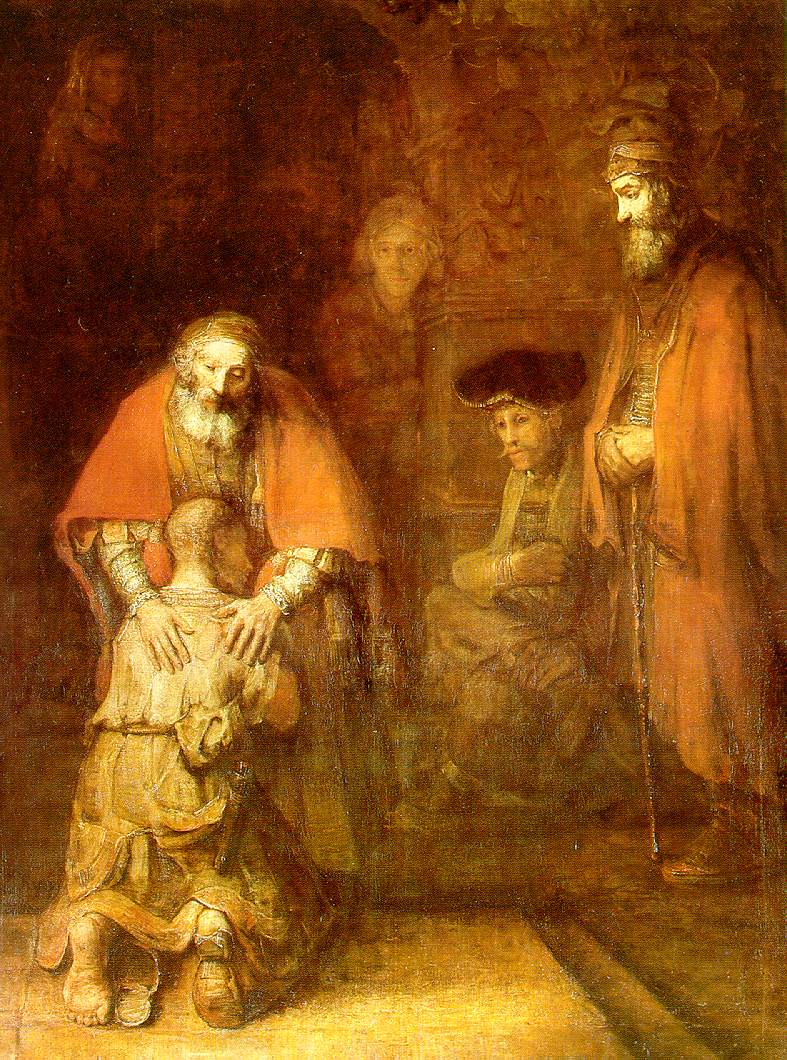
He wrote many of his most popular books while living in L'Arche, including The Road to Daybreak, Return of the Prodigal Son and Adam (the latter is about his relationship with a man with profound learning disabilities).

For more read his Wikipedia article here. Also of great interest are his thoughts on Rembrandt's Return of the Prodigal Son.

Happy Birthday - Catherine Booth

Catherine Booth (January 17, 1829 – October 4, 1890) was the Mother of The Salvation Army.

From an early age, Catherine was a serious and sensitive girl. She had a strong Christian upbringing, even going so far as to read her Bible through eight times before the age of 12.

At age 14, she was seriously ill and spent a great deal of time in bed. She kept herself busy, however, and was especially concerned about the problems of alcohol. She wrote articles for a magazine, which encouraged people not to drink.

She met William Booth, a Methodist minister, when he came to preach at her church in 1852. They soon fell in love and became engaged. During their three year engagement, Catherine was a constant support to William in his tiring work of preaching through her letters.

They were married June 16, 1855 at Stockwell Green Congregational Church in London. Their wedding was very simple, as they wanted to use their time and money for his ministry. Even on their honeymoon, William was asked to speak at meetings. Together they accepted this challenge.

At that time, it was unheard of for women to speak in adult meetings. She was convinced that women had an equal right to speak, however, and when the opportunity was given for public testimony at Gateshead, she went forward. It was the beginning of a tremendous ministry, as people were greatly challenged by her preaching. She also spoke to people in their homes, especially to alcoholics, whom she helped to make a new start in life. Often she held cottage meetings for converts.

They began the work of The Christian Mission in 1865. William preached to the poor and ragged and Catherine spoke to the wealthy, gaining support for their financially demanding ministry. She eventually began to hold her own campaigns.

When the name was changed in 1878 to The Salvation Army and William Booth became known as the General, Catherine became known as the Mother of the Army. She was behind many of the changes in the new organisation, designing the flag and bonnets for the ladies, and contributed to the Army's ideas on many important issues and matters of belief.

Catherine Booth died at age 61 in Clacton-on-Sea. The Booths had rented a small villa in sight of the sea that she loved, and on 4 October 1890 she passed away in William's arms with her family around her. She is interred with her husband in Abney Park Cemetery, London.

Monday

Happy Birthday - Martin Luther King, Jr.

The Martin Luther King, Jr. Holiday celebrates the life & legacy of a man who brought hope and healing to America. We commemorate as well the timeless values he taught us through his example -- the values of courage, truth, justice, compassion, dignity, humility & service that so radiantly defined Dr. King’s character & empowered his leadership. On this holiday, we commemorate the universal, unconditional love, forgiveness & nonviolence that empowered his revolutionary spirit.

We commemorate Dr. King’s inspiring words, because his voice & his vision filled a great void in our nation, & answered our collective longing to become a country that truly lived by its noblest principles. Yet, Dr. King knew that it wasn’t enough just to talk the talk, that he had to walk the walk for his words to be credible. And so we commemorate on this holiday the man of action, who put his life on the line for freedom & justice every day, the man who braved threats & jail & beatings & who ultimately paid the highest price to make democracy a reality for all Americans.

The King Holiday honors the life & contributions of America’s greatest champion of racial justice & equality, the leader who not only dreamed of a color-blind society, but who also lead a movement that achieved historic reforms to help make it a reality.

On this day we commemorate Dr. King’s great dream of a vibrant, multiracial nation united in justice, peace & reconciliation; a nation that has a place at the table for children of every race and room at the inn for every needy child. We are called on this holiday, not merely to honor, but to celebrate the values of equality, tolerance & interracial sister and brotherhood he so compellingly expressed in his great dream for America.

It is a day of interracial & intercultural cooperation & sharing. No other day of the year brings so many peoples from different cultural backgrounds together in such a vibrant spirit of brother & sisterhood. Whether you are African-American, Hispanic or Native American, whether you are Caucasian or Asian-American, you are part of the great dream Martin Luther King, Jr. had for America. This is not a black holiday; it is a peoples' holiday. And it is the young people of all races and religions who hold the keys to the fulfillment of his dream.

We commemorate on this holiday the ecumenical leader & visionary who embraced the unity of all faiths in love & truth. And though we take patriotic pride that Dr. King was an American, on this holiday we must also commemorate the global leader who inspired nonviolent liberation movements around the world. Indeed, on this day, programs commemorating my husband’s birthday are being observed in more than 100 nations.

The King Holiday celebrates Dr. King’s global vision of the world house, a world whose people & nations had triumphed over poverty, racism, war & violence. The holiday celebrates his vision of ecumenical solidarity, his insistence that all faiths had something meaningful to contribute to building the beloved community.

The Holiday commemorates America’s pre-eminent advocate of nonviolence --- the man who taught by his example that nonviolent action is the most powerful, revolutionary force for social change available to oppressed people in their struggles for liberation.

This holiday honors the courage of a man who endured harassment, threats and beatings, and even bombings. We commemorate the man who went to jail 29 times to achieve freedom for others, and who knew he would pay the ultimate price for his leadership, but kept on marching & protesting & organizing anyway.

Every King holiday has been a national "teach-in" on the values of nonviolence, including unconditional love, tolerance, forgiveness & reconciliation, which are so desperately-needed to unify America. It is a day of intensive education & training in Martin’s philosophy & methods of nonviolent social change and conflict-reconciliation. The Holiday provides a unique opportunity to teach young people to fight evil, not people, to get in the habit of asking themselves, "what is the most loving way I can resolve this conflict?"

On the King holiday, young people learn about the power of unconditional love even for one's adversaries as a way to fight injustice and defuse violent disputes. It is a time to show them the power of forgiveness in the healing process at the interpersonal as well as international levels.

Martin Luther King, Jr. Day is not only for celebration and remembrance, education & tribute, but above all a day of service. All across America on the Holiday, his followers perform service in hospitals and shelters and prisons & wherever people need some help. It is a day of volunteering to feed the hungry, rehabilitate housing, tutoring those who can't read, mentoring at-risk youngsters, consoling the broken-hearted & a thousand other projects for building the beloved community of his dream.

Dr. King once said that we all have to decide whether we "will walk in the light of creative altruism or the darkness of destructive selfishness. Life's most persistent & nagging question, he said, is `what are you doing for others?'" he would quote Mark 9:35, the scripture in which Jesus of Nazareth tells James & John "...whosoever will be great among you shall be your servant; & whosoever among you will be the first shall be the servant of all." And when Martin talked about the end of his mortal life in one of his last sermons, on February 4, 1968 in the pulpit of Ebenezer Baptist Church, even then he lifted up the value of service as the hallmark of a full life. "I'd like somebody to mention on that day Martin Luther King, Jr. tried to give his life serving others," he said. "I want you to say on that day, that I did try in my life...to love & serve humanity.

We call you to commemorate this Holiday by making your personal commitment to serve humanity with the vibrant spirit of unconditional love that was his greatest strength, & which empowered all of the great victories of his leadership. And with our hearts open to this spirit of unconditional love, we can indeed achieve the Beloved Community of Martin Luther King, Jr.’s dream.

May we who follow Martin now pledge to serve humanity, promote his teachings & carry forward his legacy into the 21st Century.


By Coretta Scott King


For more information on Martin Luther King Jr. Visit these websites-
My review of his biography
The King Center
Build the Dream

Saturday

Happy Birthday - George Whitefield

George Whitefield (December 16, 1714 - September 30, 1770), was a minister in the Church of England and one of the leaders of the Methodist movement.

Early life

In contemporary accounts, he, not John Wesley, is spoken of as the supreme figure and even as the founder of Methodism. He was famous for his preaching in America which was a significant part of the Great Awakening movement of Christian revivals. He has been called by some historians "the first modern celebrity."

At an early age, he found that he had a passion and talent for acting and the theatre, a passion that he would carry on through the very theatrical re-enactments of Bible stories that he told during his sermons. He was educated at the Crypt School, Gloucester, and Pembroke College, Oxford. Because Whitefield came from a poor background, he did not have the means to pay for his tuition. He therefore entered Oxford as a servitor, the lowest rank of students at Oxford. In return for free tuition, he was assigned as a servant to a number of higher ranked students. His duties would include waking them in the morning, polishing their shoes, carrying their books and even doing their coursework (see Dallimore). He was a part of the 'Holy Club' at Oxford University with the brothers, John Wesley and Charles Wesley. His genuine piety led the Bishop of Gloucester to ordain him before the canonical age.

Travels and evangelism

Whitefield preached his first sermon in the Crypt Church in his home town of Gloucester. In 1738, he went to America, becoming parish priest of Savannah, Georgia. Returning home in the following year, he resumed his evangelistic activities, with open-air homilies when other denominations' churches refused to admit him.

He parted company with Wesley over the doctrine of predestination; Whitefield was a follower of Calvin in this respect. Three churches were established in England in his name: one in Bristol and two others, the "Moorfields Tabernacle" and the "Tottenham Court Road Chapel", in London.

Whitefield's legacy is still felt in America, where he is remembered as one of the first to preach to those enslaved. The Old South Presbyterian Church in Newburyport, Massachusetts was built for the evangelist's use, and before dying Whitefield requested to be buried under the pulpit of this church, where his tomb remains to this day. In an age when crossing the Atlantic Ocean was a long and hazardous adventure, he visited America seven times, making 13 trans-Atlantic crossings in total. It is estimated that throughout his life, he preached more than 18,000 formal sermons and if less formal occasions are included, that number might rise to more than 30,000. In addition to his work in America and England, he made 15 journeys to Scotland, 2 to Ireland, and one each to Bermuda, Gibraltar, and The Netherlands.

In 1738 Whitefield preached a series of revivals in Georgia. Here he established the Bethesda Orphanage, which still exists to this day. In Georgia there was originally a prohibition on slavery. However in 1749 there was a movement to introduce it there, which Whitefield supported. When he returned to America in 1740 he preached nearly every day for months to large crowds of sometimes several thousand people as he travelled throughout the colonies, especially New England.

Like his contemporary and acquaintance, Jonathan Edwards, Whitefield preached with a Calvinist theology. He was known for his powerful voice and his ability to appeal to the emotions of a crowd, and unlike most preachers of his time spoke extemporaneously, rather than reading his sermon from notes.

Revival meetings

He first took to preaching in the open air with remarkable results at Bristol, which at that time was a center of vice in all its worst forms, and he was the first to provide spiritual privileges for the colliers who lived like heathens near that city. 20,000 of these poor workers crowded to hear him, and the white gutters caused by the tears which ran down their black cheeks showed how visibly they were affected, strong men being moved to hysterical convulsions by his wondrous power. John Wesley joining him there was not a little perplexed at these 'bodily symptoms'; he saw them as evident 'signs of grace', notwithstanding that Whitefield considered them to be 'doubtful indications'. Indeed, modern psychologists would call it symptoms of mass hysteria if there were 'persons that screamed out, and put their bodies into violent agitations and distortions' during a sermon. William Hogarth satirized such effects of Methodist preaching in his print, Credulity, Superstition, and Fanaticism (1762). Even larger crowds - Whitefield himself estimated 30,000 - met him, with the same dramatic (and contentious) effects in Cambuslang in 1742.

Whitefield's more democratic speaking style was greatly appealing to the American audience. Benjamin Franklin once attended a revival meeting in Philadelphia and was greatly impressed with his ability to deliver a message to such a large audience. He was also known to be able to use the newspaper media for beneficial publicity. His revolutionary preaching style shaped the way in which sermons were delivered. He was one of the fathers of Evangelicalism. He was certainly the best-known preacher in America in the 18th century, and because he travelled through all of the American colonies, and drew great crowds and media coverage, he was one of the most widely recognized public figures in America before George Washington.
This was taken from Wikipedia, here.

For more on Whitefield see these resources:
The Divine Dramatist
George Whitefield
The Great Awakening
Select Sermons of George Whitefield
George Whitefield's Journals

Sunday

Happy Birthday - George MacDonald

George MacDonald was a Scottish author, poet, and Christian minister. Though no longer a household name, his works (particularly his fairy tales and fantasy novels) have inspired deep admiration in such notables as W. H. Auden, J. R. R. Tolkien, and Madeleine L'Engle. C. S. Lewis wrote that he regarded MacDonald as his "master". Picking up a copy of Phantastes one day in a train station, he began to read; "a few hours later," said Lewis, "I knew I had crossed a great frontier." G. K. Chesterton cited The Princess and the Goblin as a book that had "made a difference to my whole existence". Even Mark Twain, who initially despised MacDonald, became friends with him, and there is some evidence that Twain was influenced by MacDonald.

Biography

The man who was to inspire such feeling was born on December 10, 1824 at Huntly, Aberdeenshire, Scotland. MacDonald grew up influenced by his Congregational Church, with an atmosphere of Calvinism. But MacDonald never felt comfortable with some aspects of Calvinist doctrine; indeed, legend has it that when the doctrine of predestination was first explained to him, he burst into tears. Later novels, such as Robert Falconer and Lilith, show a distaste for the Calvinist idea that God's electing love is limited to some and denied to others. Especially in his Unspoken Sermons he shows a highly developed theology.

He took his degree at the University of Aberdeen, and then went to London, studying at Highbury College for the Congregational ministry.

In 1850 he was appointed pastor of Trinity Congregational Church, Arundel. Later he was engaged in ministerial work in Manchester. He left that because of poor health, and after a short sojourn in Algiers he settled in London and taught for some time at the University of London.

His best-known works are Phantastes, The Princess and the Goblin, At the Back of the North Wind, and Lilith, all fantasy novels, and fairy tales such as — "The Light Princess", "The Golden Key", and "The Wise Woman". "I write, not for children," he wrote, "but for the child-like, whether they be of five, or fifty, or seventy-five." MacDonald also published some volumes of sermons, the pulpit not having proved an unreservedly successful venue.

MacDonald also served as a mentor to Lewis Carroll (real name Charles Dodgson); it was MacDonald's advice, and the enthusiastic reception of Alice by MacDonald's three young daughters that convinced Carroll to submit Alice for publication.

MacDonald was acquainted with most of the literary luminaries of the day; a surviving group photograph shows him with Tennyson, Dickens, Wilkie Collins, Trollope, Ruskin, Lewes, and Thackeray. While in America he was a friend of Longfellow and Walt Whitman.

He died on September 18, 1905 in Ashstead (Surrey).

As hinted above, MacDonald's use of fantasy as a literary medium for exploring the human condition greatly influenced a generation of such notable authors as C. S. Lewis (who featured him as a character in The Great Divorce), J. R. R. Tolkien, and Madeleine L'Engle. MacDonald's non-fantasy novels, such as Alec Forbes, had their influence as well; they were among the first realistic Scottish novels, and as such MacDonald has been credited with founding the "kailyard school" of Scottish writing.

In C. S. Lewis's introduction to Lewis's book, George MacDonald: An Anthology, Lewis speaks highly of MacDonald's theology:

"This collection, as I have said, was designed not to revive MacDonald's literary reputation but to spread his religious teaching. Hence most of my extracts are taken from the three volumes of Unspoken Sermons. My own debt to this book is almost as great as one man can owe to another: and nearly all serious inquirers to whom I have introduced it acknowledge that it has given them great help-sometimes indispensable help toward the very acceptance of the Christian faith. . . . I know hardly any other writer who seems to be closer, or more continually close, to the Spirit of Christ Himself. Hence his Christ-like union of tenderness and severity. Nowhere else outside the New Testament have I found terror and comfort so intertwined. . . . In making this collection I was discharging a debt of justice. I have never concealed the fact that I regarded him as my master; indeed I fancy I have never written a book in which I did not quote from him. But it has not seemed to me that those who have received my books kindly take even now sufficient notice of the affiliation. Honesty drives me to emphasize it."

From the Wikipedia article here.

Wednesday

Happy Birthday - C.S. Lewis

C.S. Lewis was an intellectual giant, & arguably the most influential Christian writer of our day. He was a Fellow & Tutor in English Literature at Oxford University until 1954 when he was elected to the Chair of Medieval & Renaissance English at Cambridge. He wrote more than 30 books, allowing him to reach a broad audience from children to scholars.
Mr. Lewis has been one of my favorite writers since I was little. I started reading the Narnia series & have been entralled by his wrinting ever since. He has a way with words that few writers or speakers have. A favorite example of this is when he says that we are content to play in the mud when God offers us a holiday at the sea.
Most people are aware of Mr. Lewis' more popular works - Mere Chriatianity, The Chronicles of Narnia, & The Screwtape Letters - and those are works that should be on everyone's have read or to read list. Today, I would like to highlight 3 of my favorites - A Grief Observed, Till We All Have Faces, & The Great Divorce.

In A Grief Observed, Mr. Lewis deals with the loss of his wife to cancer. Many are familiar with this work & this story & a wonderful portrayal of this story is called Shadowlands (starring Anthony Hopkins & Debra Winger). The book is a gut-wrenching journal-like book which shows the agony & heartbreak of a man broken. This little book has helped me tremendously through my past pain & grief. Quote of the book -

"Meanwhile, where is God? This is one of the most disquieting symptoms. When you are happy, so happy that you have no sense of needing Him, so happy that you are tempted to feel His claims upon you as an interruption, if you remember yourself & turn to Him with gratitude & praise, you will be - or so it feels - welcomed with open arms. But go to Him when your need is desperate, when all other help is vain, & what do you find? A door slammed in your face, & a sound of bolting & double bolting on the inside. And after that, silence. You may as well turn away. The longer you wait, the more emphatic the silence will become. There are no lights in the windows. It might be an empty house. Was it ever inhabited? It seemed so once. And that seeming was as strong as this. What can this mean? Why is He so present a commander in our time of prosperity & so very absent a help in time of trouble?"

A lesser known work of Mr. Lewis is Till We Have Faces. This is a novelization of the classical myth of Cupid & Psyche. Mr. Lewis said this about the rationale behind the retelling of the myth - "The idea of re-writing the old myth, with the palace invisible, has been in my mind ever since I was an undergraduate and it always involved writing through the mouth of the elder sister. I tried it in all sorts of verse-forms in the days when I still supposed myself to be a poet. So, though the version you have read was very quickly written, you might say I’ve been at work on Orual for 35 years. Of course in my pre-Christian days she was to be in the right and the gods in the wrong." Go here for a plot summary from Wikipedia.

The Great Divorce takes the reader on a bus ride which travels through heaven & hell. In the preface of the book, Mr/ Lewis writes, "But what, you ask, of earth? Earth I think, will not be found by anyone to be in the end a very distinct place. I think earth, if chosen instead of Heaven, will turn out to have been, all along, only a region in Hell: and earth, if put second to Heaven, to have been from the beginning a part of Heaven itself."
The interesting thing that Mr. Lewis paints regarding Hell is that there is no community life. I found The Great Divorce not only wildly entertaining to read, but also profound in it's thought.

C.S. Lewis, for me, always provoked my thinking & helped me grasp concepts I might otherwise have never understand. I hope that if you ahve not become aquainted with his writings, that this will spur you on to visit both his popular & under-the-radar titles. Visit the Wikipedia article for further information on C.S. Lewis

Monday

Happy Birthday - St. Augustine

The greatest of the Church Fathers was Saint Augustine , born on this day, 354(CE) in North Africa. With a brilliant mind and a restless heart, Augustine followed philosophy & pleasure, until his mother’s prayers, a bishop’s counsel, & a child-like voice wooed him into the Christian faith. He then became a church leader in a crucial time, shaping the church for centuries to come.

Augustine devoted himself to the service of the Church. In public debate & in his writings, he defended the teachings of the Church against heretics & those who would cause schism in the Church. The controversies which occupied so much of Augustine's time & energy were witht the Manicheans, the Donatists, & the Pelagians.
The teachings of Augustine largely dominated the Roman Catholic Church of the Middle Ages; & from this, Luther & the other Reformers also received their inspiration.
The two most famous works of Augustine are his Confessions & The City of God. In his Confessions Augustine lets his early life"all hang out" & shares the innermost depths of his heart. In the City of God he gives his philosophy of history. Other witings include On the Trinity, On Christian Doctrine, & Enchiridion.

The measure of Augustine’s importance goes beyond the rare title, “Doctor of the Church,” given to him in the Middle Ages. He was the first to give a self-examination before God in the form of his Confessions and because of that give the church a biblical understanding of a man’s life under the grace of God. He was the first to give a biblical view of history, time, and the state in his City of God. He established the doctrine of the church in his anti-Donatist writings, a view that prevailed in the church for centuries. He gave the Western church a clear statement concerning the person of Christ, which was later established as doctrine by Leo. He made the grace of God in the gospel the theme of theology in the West.
Some great biographies have been written about St. Augustine. James O'Donnell is a brilliant Augustine scholar & has the most recent bio out. But, in my estimation, the best biography of Augustine is Peter Brown's. If you would like a primer on his work, here is a good start, & here is the more advanced steps.

For more information, visit Augustine's Wikipedia article here, James O'Donnell's website on Augustine here, & CCEL's information here.

Friday

Happy Birthday - Martin Luther

On this day in 1483, Martin Luther was born. Luther has been one of my favorite people from church history since I was in middle school. I read Roland Bainton's biography of Luther & read the he taunted Satan when the devil would come & tempt him at night saying things like "If you remind me of my sins, I can name 100's more that you failed to mention", & "Oh St. Satan, I know that I could never live up to your standard of perfection, so just leave me be!" Statements like that just drew me to him.

Most of us are well aware of his famous run-in with Tetzel & eventually the Pope leading him to finally claim, “My conscience is captive to the Word of God . . . Here I stand, I can do no other”, but he was a prolific writer - both books & hymns including his 95 Theses. He translated the Bible into the language of German so common people could have a Bible of their own & not feel dependent on clergy. There is a 55 volume set of his complete writings (also available on CD-ROM). A book of his I would highly recommend to get you started in his thought is Faith & Freedom. It is subtitled An Invitation to the Writings of Martin Luther. This will give you a taste of his life, his exposition on both Testaments as well as his table talk & letters. If you would like to go deeper, I would recommend his Basic Theological Writings.

To get a glimpse at Luther's life, I definitely recommend the recent movie, Luther. This film gives a basic overview of his life & I found it fascinating. When it released in theaters, they skipped my area in Northern California, so I had to wait until they released it on DVD. Well worth the wait. The film does not place Luther up on pedestalal, but gives an accurate portrayal of the man & his life & struggles. Another good recent resource is John Piper's book The Legacy of Sovereign Joy in which Piper writes about God's grace triumphing in the lives of Luther, Calvin & Augustine.

If you are a fan of Luther & have a sense of humor, I would highly recommend the Luther Bobblehead. I bought one of these for my dad & myself a few years ago & he cracks me up. I also have a small bust of Pope John Paul II my best friend bought for me in Italy a bunch of years ago & I am fairly confident they have it out in my cube at night.

Luther has always been my favorite reformer. I find him to be such a real, work-in-progress believer who loved God & was real. His hymns still draw me closer to God & hifeistyty spirit is needed from time to time. Let's celebrate by nailing stuff to our church doors! (OK, maybe not).

If you would like even more history & information on Luther, I suggest his Wikipedia article here.