Showing posts with label Finances. Show all posts

Tuesday

The High Price of Materialism


A few years ago, I came across the book, The High Price of Materialism. I paged through it & thought it looked interesting and bought it. I came home with it and put it on my shelf. Every time I saw the book, I said, "I really need to read that". About three years later, I finally did. It was well worth the read.
The High Price of Materialism is a book which offers research as to the problem , as well as suggestions to overcome the permeating materialism in our lives. From the thousands of ads, programs we watch, magazines we read, and various other sources, the message reads, "Happiness can be found at the mall, on the Internet, or in the catalog."
In, The High Price of Materialism, Dr. Tim Kasser offers a scientific explanation of how consumerism affects our everyday happiness and psychological health. Dr. Kasser investigates how people's desires relate to their well-being. He shows that people whose values center on the accumulation of wealth or material possessions face a greater risk of unhappiness, including anxiety, depression, and problems with intimacy.
Dr. Kasser explores the mixed messages we receive everyday that certain things and possessions will bring us happiness, when in fact they serve to only make us more greedy and less happy. He begins by looking at what the research shows on how materialism affects our personal well-being, and our psychological needs. Then he spends the bulk of the books showing how it feeds our insecurities, our fragile self-worth, and our poor relationships. Lastly, Dr. Kasser explains how the chains of materialism wrap themselves around us and several ways to make changes away from consumerism as individuals, families and as a society.
One of the helpful suggestions he makes in regards to making changes individually is to ask yourself why you really want something. He states, "The truth is that money is good only for buying food, shelter, safty, and other necessities; it can never really buy self-esteem, love or freedom....ask yourself whether materialistic values have actually worked for you, or whether they continue to perpetuate your problems instead."
You may be thinking to yourself that you are not materialist, that you, as a Christian, do have different sets of values. And you would be right. However, being a Christian myself, as well as knowing many other Christians, I am bound to say that this value set of consumerism is rampant in the church. I would dare say that most Christians sitting in the pew today, would do well to at least think about why they are purchasing something, and about the items we already own, if not pick up this book (at the library!) and understand what materialism does to our values.

Fields of Gold

My church is going through Andy Stanley's Fields of Gold book for the next couple weeks. As a small group leader, I am going to go through the book as well with my group. Fields of Gold is about generous giving and living free from fear as we give back to the Lord.
Mr. Stanley believes that much of the anxiety which comes from Christians about giving is tied less to stingy greed than to basic fear.
We feel that if we are too generous that we will be left destitute or at least unable to support ourselves. We wish to give more, but we are afraid that our needs will somehow not be met. Mr. Stanley writes to "free you from a percentage mentality and to introduce you to a way of life built on the premise that God is a rewarder of those who seek Him and His kingdom first." As Christians, we should not live in a place of fear, because ultimately, God is going to take care of us. When we come to the end of our rope, we have something those outside of a relationship with Jesus do not have - a loving Father ready & able to take care of us.
Mr. Stanley wants Christians to live with open hands on what is the Lord's anyway and to be ready to give at all times. Many Christians are also muddled in a percentage mentality. "What percentage must I give to keep God happy or at bay? 10%, 30%, 50%?" Mr. Stanley looks to that question and seeks to alleviate any hesitation of lack of joy in our giving.
One thing that struck me (which most of you more than likely have already made the connection with, so bear with me) is that Mr. Stanley writes, "the brake lights often come on when I urge people to give their hard-earned money." The word hard-earned hit me & I began thinking about the curse. Our work is hard, as a direct result of the Fall. Therefore, our payment for that work is meant to be hard-earned. If the Fall never happened, than we would still work, but the phrase hard-earned money may never have come into existence. So, because we were rebellious and sinned at the Fall, work became hard work but now we feel the money from that hard work is more deservedly ours because it cost us something. When I thought of it that way, it really struck me as backward thinking.
Fields of Gold is one of many good books on giving & finances, but has the added benefit of being fairly inexpensive. My church bought up a bunch from NextStep & then is passing them out to each couple or single in a small group.

Monday

10 Questions With...Brian Kluth

Brian Kluth is Senior Pastor of the First Evangelical Free Church of Colorado Springs. Prior to this time he was involved in Christian leadership positions and a national and international speaking ministry. He has been a speaker at Promise Keeper events, university campuses, leadership conferences, and Christian camps and retreats. Over the years his ministry travels have taken him to cities across America and to more than 35 countries. Having just come home from a speaking trip in South Africa regarding generous living, Pastor Kluth was gracious enough to take the time to answer these questions. He has written a booklet - A 40 Day Spiritual Journey to a More Generous Life. He also has a website - Maximum Generosity.


1. NSR - When did God teach you about generosity?
Brian Kluth - The Bible says that we are to “excel in the grace of giving”. After coming to Christ in college, God has graciously led me to growing levels of generosity in my life. From the first $20 I put in the offering plate as a new Christian to times when the Lord has called my wife and I to give gifts that were equivalent to 50% and 100% of our annual income, I/we have found ourselves on a God-led and grace-filled journey to living a generous life. God’s transforming power has been amazing in my life since as a teenager and college student I was very materialistic and would steal (from family members, shops, and employers) to get the things I wanted.

2. NSR - What led you to write the book?
BK - In the last fifteen years, I have spoken to thousands of pastors and church leaders at conferences and leadership seminars on church giving in the U.S. and overseas. Wherever I’ve gone, churches did not have a way to inspire greater levels of generosity by putting God’s Word on finances/giving into people’s hands. The result has been growing levels of materialism and indebtedness while giving to the Lord’s work has been declining as a priority in people’s lives. While I am a great advocate for churches offering financial classes/courses/studies/seminars for their congregation, I found that these programs will only reach a handful of people in the congregation. I felt a great need to produce something attractive, affordable, filled-with-Scripture, and easy to read that every person or family in a church could easily go through and allow the Word of God to touch and transform their attitudes and actions on giving financially to the Lord’s work. Sidebar note: I was hoping a Christian publisher would publish and promote this book and submitted proposals to 7 publishers. I received a rejection from all of them indicating that no one would ever buy this book because there is no market for books on generosity. So after praying about it, my wife and I took some inheritance money from my mother’s home going and printed 15,000 copies of this booklet. By God’s grace, over 80,000 copies have been ordered in the first 8 months by churches (ordering copies to every household/family in their church), denominations (sending copies to every pastor) and ministries (sending copies to every donor). The booklet has been or is being translated into Spanish, Portuguese, Hindi, Mongolian, Serbian, Croatian, an African tribal language, and South African Afrikaans. One denomination is planning on using it worldwide in 11 regions of the globe. An international ministry is planning on working with 99 seminaries across the world to have copies distributed among each seminary’s students and supporters.

3. NSR - If you could get one point across from your book, You Are Invited on a 40 Day Spiritual Journey to a More Generous Life, what would that be?
BK - Every Christian believer is called and encouraged by God to faithfully and generously give to the LORD from whatever God has entrusted to them. I do not believe any church has a “money problem”, only a faithfulness problem.

4. NSR - What are things that parents can do to teach their children to be givers (along with going through your study)?
BK - Going through the study as a family during a meal time will be a great first step towards moving a couple or a family towards greater levels of intentional and inspired generosity. We did this with our family when our children were 7, 9 and 11 and it was a great way to help our children understand details about our income, lifestyle and giving priorities. Since our children were little we have had an envelope system for their finances. We gave each of them 3 envelopes and had them draw pictures on each envelope. The first envelope was for the Lord’s work, the second envelope was for savings, and the third envelope was for spending. Wherever they received any money (birthday, Christmas, allowances, chores, etc.) we would take them and have them divide up the funds into the 3 envelopes (10% or more for the Lord, 10-40% for savings, and 50 to 80% for spending). At Thanksgiving, we would get a Samaritan’s Purse catalog of giving opportunities to help people in need. Each child would be told they had $100 (or whatever amount we decided) and they would be able to look through the catalog and determine how they wanted to invest their giving dollars in the Lord’s work. Each person would then take time to tell everyone what things they’ve chosen to fund (i.e. purchase Bibles, buy a goat for a family in need, pay for school supplies, etc.). Recently, we told our children (now 10, 12 and 14) that they would have an extra $1000 this year to give to the Lord’s work (for missionaries, relief work, a family in need, a special project at church, etc.). For several years, we have also had our children involved in shopping for Operation Christmas Child gifts.

5. NSR - You taught one of the video sessions in Crown Financial Ministry’s “Discovering God’s Way of Handling Money”. You said that if people do not learn to give their tithes & offerings first, learning about budgeting & saving will not help their finances. Why is this?
BK - A person can become a great budgeter, a great saver, and a great investor, but if they don’t learn to be a great giver to God what’s the point? We’re not to live for ourselves in this life but to live for the glory of God and the benefit of others in our generation. We’re blessed to be a blessing.

6. NSR - What do you see as a crucial topic facing the evangelical church at large today?
BK - Teaching God’s Word on finances and generosity is a vital area of spiritual transformation and Christian discipleship that is being avoided by most pastors and churches today. This has been the “silent subject” and the “Great Omission” in the church for over 50 years. Martin Luther is reported as having said, “People go through 3 conversions. Their head, their heart and their pocketbook - - unfortunately, not all at the same time.” Many of our churches are filled with unconverted pocketbooks. This is not an issue of budgets, bills, and buildings - - but an issue of spiritual transformation. If Jesus is not Lord over 100% of what we have is He Lord at all in our lives? One man told me that until he learned to faithfully and generously learn to give to God he was only “playing church” but wasn’t fully committed to Christ. When I have been a speaker for PromiseKeeper events around the country or a guest generosity preacher at churches, I have had people at the end of my message take out their wallets and dedicate them to the Lord. With their wallets in their hands, I lead people in a prayer to dedicate all they have and all they ever will have to the Lord.

7. NSR - After a person / church learns about giving, do you have any recommendations on books or studies on finances as whole?
BK - I would encourage every church to offer a financial class/course/study that people can go through to get their finances in order. I recommend Crown, Good $ense Ministry, or Dave Ramsey.

8. NSR - What are your feelings in general about the prosperity gospel?
BK - I feel the prosperity gospel isn’t a gospel at all (it’s not good news) - - it is a distortion of the whole truth of God’s Word. In September 2006 the cover of Time Magazine asked the question: “Does God Want You Rich?” and on the inside article examined the current trend towards pastors preaching the prosperity gospel. On my MAXIMUMgenerosity.org website, I contrast 4 stewardship views operating today - - Poverty Theology, Prosperity Theology, Consumer Theology (this is the one most practiced in evangelical churches), and Balanced Biblical Theology. I believe the first 3 views miss God’s intentions for mankind whereas the last view best represents God desire for people everywhere, The link to this handout is here.

9. NSR - In speaking to other leaders & pastors, how often should a pastor speak to his church about finances, especially in regards to giving?
BK - Since there are 2,350 verses in the Bible on finances, material possessions, and generosity, the Lord must have intended that as spiritual leaders we help people understand how God Word and will intersects in their lives in this important area. At my church, I am preaching through all the books of the Bible over a 4-5 year period, so I find that it is normally a point within a sermon has to do with an overall perspective to finances/possessions, but only once or twice a year is it the whole focus of the sermon on giving financially. In churches that use a topical approach to preaching, it would probably be wise to have a financial sermon series once a year, with one of the messages focused on giving. But in a worship service, I have found that the power of a generosity testimony (having someone answer one of the weekly questions from my GenerousLife.info) booklet has a tremendous ability to influence a congregation’s attitudes and actions about giving to the Lord. I also encourage churches to use PowerPoint offertory slides when they pray for and collect their offerings. Sermonspice.com also has some excellent video clips on finances and generosity.

10. NSR - Do you feel that the tithe should go to the local church and excess giving can be given to individual missionaries and missions, or does it matter?
BK - In my GenerousLife.info Bible devotional booklet that churches are using to help teach all the families in their congregation about generosity, I encourage (but do not mandate) that people to give 10% or more of their “main income” (expected salary) to their main ministry (their local church). I then encourage them to use “extra income sources” (2nd income, bonuses, overtime, investment returns, etc.) to the “extra” ministries and people in need that they care about. My wife and I have done this for years and we have found that this approach allows us to be generous and faithful to our local congregation while at the same time generously supporting other ministries and people that God lays on our hearts. Over the years, I have also learned to avoid using the word tithe because you quickly become embroiled in theological debates with some people in the church (i.e. tithe = OT Law, etc.). But I do teach and encourage people to give 10% or more to the Lord’s work. I have found even in counseling with people in deep financial troubles that giving the first 10% of their income to the Lord’s work is the beginning step to invite God’s help in their finances. I have also learned that giving 10% is not the finish line, but only the starting point of faithful giving to the Lord. Ultimately, we’re to excel in the grace of giving and in my own journey, I started at the 10% level but over the years God has graciously worked in my heart and life to cheerfully give far more than 10%.

Wednesday

Good $ense Budget Course

The Good $ense Budget Course aims at helping people experience the joy of financial freedom.
  • About 43% of American families spend more than they earn each year.
  • Average households carry some $8,000 in credit card debt.
  • Personal bankruptcies have doubled in the past decade.
This course helps participants discover tools & develop skills that enable them to control their finances, rather than allowing their finances to control them.
That may be good & all, but shouldn't people go see a financial planner for this? Why should the church be involved?
"We come to the Bible for comfort, not financial instruction. If we want to know about money, we're more apt to pick up the Wall Street Journal...Scripture should concern itself with what's spiritual and heavenly. Money is physical and earthly." But Scripture devotes twice as many verses to money (about 2,350 of them) than to faith and prayer combined. Jesus said more about money than both heaven and hell. (from Randy Alcorn's excellent book, Money, Possessions and Eternity).

The Good $ense Budget Course will lead your church, workshop, Sunday school class or small group through the importance of seeing ourselves as "trustees" instead of "owners" with our money and finances, and how to prioritize their goals and develop a spending plan.
The format for this course can be done in a multitude of ways. It can be given as a one-day workshop (around five hours total), in six sessions (good for small groups, Sunday school classes and ABF's), or in a retreat format from one to three days long.
There is a good deal of preparation that needs to go into putting on a course. There is pre-work which each participant must do (around six pages & in depth) and the leader of the course must have a good handle on the material. There is a CD-Rom which has a Power-Point presentation on it as well as a DVD which has short video vignettes, but the leader needs a good amount of prep time before coming to a session.
The material itself is well worth the work which must be done. It is important to have a good financial picture and stick to a budget (this comes from one who has a very hard time doing what I just said!). But I believe the overall idea of the course that we are entrusted with what we are given and that we need to be able to give an account of what we have done with it.

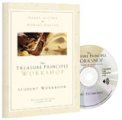
The Treasure Principle Workshop

“Do not store up for yourselves treasures on earth, where moth and rust destroy, and where thieves break in and steal. But store up for yourselves treasures in heaven, where moth and rust do not destroy, and where thieves do not break in and steal. For where your treasure is, there your heart will be also.” – (Matthew 6:19-21 NIV)

“As a percentage of household income, giving to religious centers was about 2.2 percent of gross income. Overall, only 4 percent of American households gave ten percent or more of their income to their churches.”

Source: Giving to Churches Rose Substantially in 2003, Barna Research Group,www.barna.org, April 13, 2004.


The Treasure Principle Workshop is a six session study teaching the joy of giving. The study is a media-driven study based on Randy Alcorn’s book of the same name. This small or large group study takes participants through the some of the Biblical teachings on giving. Each video session is around 30 minutes long & includes teaching, testimony & dramatic presentation.

This workshop is one of a series of Crown Financial Ministries many resources. Each workshop from Crown uses biblical principles to address a practical topic, such as getting out of debt, investing, budgeting, what engaged couples need to know about money & many others.

The workshop comes with two DVD’s, which include the six sessions, as well as one leader’s guide & one student workbook. The student workbook is interspersed with fill-in-the-blank type questions as well as more thought-provoking personal questions. The leader’s guide walks the leader through the series & provides the correct answers for the fill-in-the-blank video questions. It also offers advice on the number of different venues you can use this workshop in.

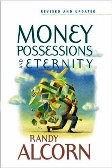
A few months back, I reviewed Mr. Alcorn’s book Money, Possessions & Eternity. That book flipped upside down how I thought about money. This study touches on the principles from that book & is a great group study. I have seen better video presentations, but this one is good & the material is virtually essential for every believer to wrestle with.

Pick up a copy of the Workshop here.

Rich 013


Rich is the newest installment from Rob Bell & nooma. For those unfamiliar with nooma, they are DVD's of Mr. Bell briefly speaking to a subject, usually with a visual lesson running through the course of the presentation. (If you go here you can see the first nooma, Rain 001 in its entirety). They are generally between 11-13 minutes long & come with a booklet which has some of the key talking points from the presentation.
I have seen about half of them & I have to say that for the most part they are quite moving & compelling. (Rain 001 nearly had me in tears). There has only been one which I strongly disliked. The rest (that I have seen) are quite good.
Rich is one of the best. Maybe this is one of the topics which I have been tracking with most recently, but I really feel every Christian needs to be aware of what Mr. Bell is speaking about in Rich.
The Basic premise of Rich is that God has blessed America & that maybe instead of asking for continual blessing, we should turn it around & bless others with our surplus. Mr. Bell uses other Scripture in this presentation, but the passage which came to my mind was in Genesis 12. God tells Abram that "I will bless you & make you famous, & I will make you a blessing to others...All the families of the earth will be blessed through you." Mr. Bell gives facts & statistics regarding the plight of some of the world's poorest people, & I will not take away from his presentation, but the fact is that millions of people are worse off than the poorest people in America (don't believe me? go here).
Regardless of how people get educated (through a nooma, book or website), the important thing is to get educated.

Watch a clip of Rich here.
http://tenderfoot.windborne.net/nextstep/product_info.php?products_id=7407 (100% of proceeds will be donated to charitable organizations that clothe the naked, take food to the hungry, & take water to the thirsty).


Category: Bible Studies, Social Justice

Thursday

Money, Possessions & Eternity


No other book except the Bible has ever challenged my beliefs, attitudes & philosophy in life as much as this book.

Seriously.

A few years ago I led a college group study on giving. I read this passage from Giving (part of the Pursuing Spiritual Transformation Series): "Were I the Bible's editor, I would cut out much of what it says about money & possessions. Anyone can see it devotes a disproportionate amount of space to a subject of secondary importance....Money is physical & earthly. The Bible is religious; money is secular. Let God talk about love & grace & brotherhood, thank you. Let the rest of us talk about money & possessions. How could the Bible's Author & Editor justify devoting twice as many verses to money than to faith & prayer combined? And how could Jesus say more about money than both heaven & hell? Why did the Savior of the world say more about how we are to view & handle money & possessions than about any other single thing? Why?"
That sparked the best small group discussion I have ever been apart of. We went on for hours talking about Scripture, money & the translation to our daily lives. That passage was adapted for that Giving study from Randy Alcorn's Money, Possessions & Eternity. Since that time I have wanted to read this book.
Well, last week I finally did. Wow.
From the first page to the last, I was provoked, challenged, convicted, engaged & humbled. That paragraph I quoted (God should talk about spiritual things & let us talk about money) described me. I tried to live whole-heartedly for God, but never put 2+2 together that it also included my attitudes toward money & possessions.
May of the statistics in this book are mind boggeling, but I'll let you read them for yourself in the book. Let's suffice it to say that the state of giving in the Evangelical world is less than impressive. (That includes this writer).
This book is not just a big book on tithing. It discusses all possessions, debt, savings, lending, gambling, fund-raising & a host of other topics. It is an excellent resource to have & a challenging book to read.


- posted by cubfann

Wednesday

Living With Less

Cara Davis, Managing Editor of Relevant Magazine has written a review of Living With Less. Here is her review of the book. This book looks very interesting to me. On Mr. Tabb's website, he says this about the book, "Discover the upside of downsizing your life in Mark's latest book. With his usual mixture of touching prose and biting humor, Mark shows how the only way to get what you really want out of life is to choose less: Less stuff. Less activity. Less wanting more. The key to getting more out of life is to live with less."
Check out the book for yourself here.