Relevant Magazine did an interview with the authors of the forthcoming book, Justice in the Burbs. Here is a link to the Relevant website for the interview. For the time I heard about this book being published, I have been more than a little bit interested in reading it.
Also, here is a video of the authors talking about their book.
Choose your team. Are you evangelical or emergent? You are either one or the other. Many people feel that this is the only choice that lies before them. Are you with MacArthur or McLaren? The choice is not black and white, though. From the time that I was able to talk, the word my dad wanted me to learn was moderation. I feel because of his influence, I try to see both sides of an issue. That does not mean that I do not hold fast to truth, nor that I agree with both sides, but that I look for the positive and negative in both sides. There are positives and there are negatives to both the evangelical perspective and the emergent perspective. There are things that I love about both. There are things I strongly dislike about both. I find myself leaning much more to the evangelical side, but again, there are aspects of the emergent side I truly respect and think evangelicals would do well to adopt. The emergent crowd is very outspoken in regards to living the Kingdom here and now. We are called to renew, restore and revive creation here and now. But I feel that they only take us half way. We are very much called to do that Kingdom work, but the Kingdom is already, but also not-yet. Even with the filling of the Spirit, with the gospel, we cannot restore creation to its perfect state. That only comes when Jesus comes back. I do not see many emergent conversations about that aspect of theology. In the recent book, An Emergent Manifesto of Hope, 27 friends of emergent write 27 totally different articles, but each one speaks of hope in their respective area. From parenting to evangelism to community living to Karl Barth, each author speaks of an overarching hope. Tony Jones, the National Coordinator of Emergent Village, writes that many evangelicals have a theology of despair, that we believe that the world is getting worse, not better. He, on the other hand, says the writers of this book "take the contrary view. God's promised future is good, and it awaits us, beckoning us forward. We're caught in the tractor beam of redemption and re-creation, and there's no sense fighting it, so we might as well cooperate." I agree, God's future is good, however, that full redemption will not come until Jesus does. We are called to redeem culture, creation and such, but only Jesus can do that fully (Already - Not-yet). I also do not agree with the doom and gloom position that this world and culture are going to hell in a hand basket & cannot be salvaged at all, nor is it worth the attempt. That is going to the other end of the pendulum swing and only waiting for the Kingdom not-yet. There needs to be a balance. All of this to say that this book has good aspects and bad. There are things which I was appalled with and found helpful - even in the writings of the same person. One instance of this was Carla Barnhill's writing on parenting. I agreed that the church needs to be a place children feel welcome and interested in going. However, the means she illustrated in going about that left quite a lot to be desired. (Please do not brag about your nine year old having not memorized a single Bible verse). These writings make the reader think and wrestle with their own conclusions. A good read on a variety of topics and will challenge much of the readers thought.
I am a big fan of the counterpoints series by Zondervan. I find it interesting and challenging to read viewpoints of people I see eye to eye with as well as people I respect, but do not agree with. Listening to the Beliefs of Emerging Churches is a book in the tradition of the counterpoints series. In this book, Dr. Robert Webber gathers five pastors who are all in the thick of emerging church ministry (emerging ministry being ministry to those 35 years old and under, NOT emergent ministry). All of these pastors are church planters, three are evangelicals and two are emergent. Each of them were directed to write about three topics and how different aspects of theology effect those topics. The three topics? Scripture, the atonement and the Trinity. The different aspects of theology? Biblicist theology, incarnational theology, missional theology, embodied theology, and communal theology. Each of the authors writes their chapter and then has each of the other four write a response to it. All five of the writers are familiar with one another, if not good friends, and the remarks reflect that friendly attitude, even when the writers vehemently disagree. The reader can tell that this is a discussion many of the writers have had with one another in person and will continue to have in the future. Each of the writers have presented very good chapters and both the writers I do not agree with and agree with made me stop and search the Scripture myself and confirm for myself what the Bible says. I also agree with John Burke's initial response to Mark Driscoll's chapter - "I think Mark just made this book worth buying." And although I do agree with that - I would strongly encourage you to read the rest of the book. Especially the pastors you might now agree with. I always find it good to read something that makes me think, makes me reflect on what and why I believe, and each person in this book does that.
Discuss this book on the NextStep Message Boards.Link
In my experience, people either follow John MacArthur's every word or disregard him. I have been in the latter camp. It's not that he is a bad guy or that he teaches wrongly, I just find him to be quite belligerent and somewhat condescending. That is the feeling I had while reading this book. I believe that there are very good things that Dr. MacArthur has to say in The Truth War, but it is so very combatant. We do need to stand up and fight for our beliefs, but as Paul says, speak the truth in love (Eph. 4.15). I wholeheartedly agree with Dr. MacArthur that there is objective truth and that it needs to be declared and adhered to. I do not agree that "nothing in the world is more important or more valuable than the truth." When Dr. MacArthur defines truth for the reader, he says it is "that which is consistent with the mind, will, character, glory, and being of God. Even more to the point: truth is the self-expression of God." I would submit that truth is vitally important, but not the most important thing. Jesus did say that he was the Truth, but in conjunction with the Life and the Way. Not to sound overly spiritual, but if I were to finish the sentence, "nothing in the world is more than important than ____", I would end with "Jesus". Jesus was Truth, to be sure, but he was so much more. He was Love, Peace, & Holy. Again, I agree with Dr. MacArthur that some today have become to lenient with the Truth of the gospel. However, I also believe that there are many, many things in Scripture that are a foggy mystery & will remain so until we come face to face with Jesus. Dr. MacArthur says that " It [the demise of certainty] is unbelief cloaked in a religious disguise and seeking legitimacy as if it were merely a humbler kind of faith...it is the worst kind of infidelity." Now I would agree - to a point. If you are saying that no truth can be known, that the Scriptures are a guide, a good idea of what the truth is, than yes, that would be classified, to me, as unbelief. However, I hear very few evangelicals saying things like this. What I hear is that people stand by the solid, objective truth of Jesus being the God-Man who actually lived and died for the sins of humanity, bodily arose and will return again for his chosen people. But I would have to believe that the majority of evangelicals are not questioning that, they have questions about the certainty of beliefs such as Calvinism & Arminianism, gifts of the Spirit, and the like. Those things are mysteries & will never be resolved until Jesus comes back. There are mysteries in the Bible - things that we just cannot understand. I am ok with that, I get the sense that Dr. MacArthur is not. I believe that Dr. MacArthur has good intentions, however, I do not, personally, agree with his approach. For a very good treatment of the postmodern movement and how it effects the church today, I would recommend D.A. Carson's book, Becoming Conversant with the Emerging Church.
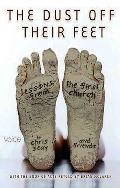
The Dust Off Their Feet includes a retelling of the book of Acts by Brian McLaren & commentary about the oppression of the early church by professors & theologians such as David Capes, Robert Creech, Greg Garret, Andrew Jones, Tim Keel, Evan Lauer, Kerry Shook, & Chuck Smith Jr. Interspersed throughout the retelling of Acts, Chris Seay offers several commentary essays, intended to help the reader to grasp some of the underlying circumstances in the action.
The Dust Off Their Feet is the second Scripture project of The Voice. The Voice is created for & by a church in great transition. Ecclesia Bible Society is developing Scripture products that foster spiritual growth & theological exploration out of a heart for worship & mission. The Voice represents collaboration among scholars, pastors, writers, musicians, poets, & other artists. The goal is to help believers experience the joy & wonder of God’s revelation.
“Chris Seay's vision for The Voice goes back 15 years to his early attempts to celebrate the beauty and truth of the biblical narrative. As western culture moved into what is now referred to as postmodernism, Chris struggled with a deep desire to preach the whole story of God. Much like the Hebrews at the time of the New Testament, emerging generations today connect with story rather than isolated facts. Too often, preaching is reduced to articulating truth statements somehow hidden in a complex, powerful, and redemptive story. Jesus taught through parables and metaphors; modern Christians have attempted to translate His teaching into a system of irrefutable fact statements and something seems to be getting lost in the translation.” – from hearthevoice.com
I enjoyed reading through The Dust Off Their Feet. From a purely storytelling perspective, the retelling of Acts is great. You are not going to do serious Bible study using the retelling, any more than you would with the NLT. I am for anything that gets Scripture into the hands & minds of people, & I think that this is a great tool for reaching a new generation with the Scriptures. The commentary in the second half of the book was quite interesting as well. It is broken up into two smaller sections itself – commentary on the church at the time of the happenings of Acts & the second speaks of how to approach the book of Acts in today’s context.
Overall, The Dust Off Their Feet is a good resource to be aware of & interact with. Pick up a copy here for 20% off.
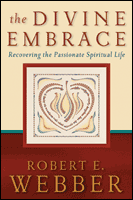
Robert Webber’s newest book in the Ancient-Future series is entitled “The Divine Embrace: Recovering the Passionate Spiritual Life”. Although I have never read any of Mr. Webber’s work before, I was interested in this title because of the subject – passionate spirituality. This is one of the 10 Indicators of a healthy church within the EFCA. I have always been a fan of Eugene Peterson as well, who often writes about spirituality.
I did not like the book. For a book talking about passionate spirituality, there was just dry academia. I like dry academia – but not in a book which I expect to read, discover & encounter passionate spirituality. I found myself bored right after the opening story.
Mr. Webber breaks his book up into two parts. The first part is entitled “The Crisis – How Spirituality became separated from the Divine Embrace.” This section takes the reader through a historical overview of spirituality from the time of Jesus to the present. The second part, entitled “The Challenge – Returning Spirituality to the Divine Embrace”, tells the Gospel story & tries to weave it into our own.
If you have interest in passionate spirituality, I would say this is a book to flip through & be aware of, but a better resource is a talk that the EFCA National Ministries director, Fritz Dale gave at the 2006 National Leadership Conference. Mr. Dale interacts with Scripture, Eugene Peterson & presents some of his owns learning on the subject.
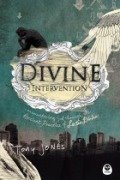
In Tony Jones’ new book, Divine Intervention, the reader is led on a journey through the ancient practice of lectio divina. Lectio divina is a method of communicating with God using lectio, meditatio, oratio, & contemplatio. For those not fluent in Latin, basically what we are talking about here is conversing with God by reading (lectio), meditating (meditatio), talking (oratio), & contemplating (contemplatio).
Simply put, the participant reads a passage of Scripture repeatedly (& not just 2-3 times, but more like 15-20 times) & waits for God to bring a word or phrase to mind. Then you chew on that word or phrase, bringing rise any feelings & emotions which come to the surface. Next, you respond to God regarding what He has said to you. Finally you take rest in God & dwell on His word for you. (This is a very brief explanation.)
It all sounds quite eastern & mystical at first, but it is a practice which Christians have employed for centuries. If you are anything like me, you want a deeper, more intimate prayer life, but you have difficulty praying. I know the importance of prayer & why we pray, but I have never been anything close to what people call a prayer warrior. So with that in mind, I was willing to try anything to be more intimately related to my Father. I finished the book & decided to give it a go this morning. Using the steps outlined in the book & a passage suggested at the end of the book, I had an amazing time of communion with God.
Mr. Jones starts off giving some reasons why people use this practice to communicate with God as well as the practice’s history & uses. Mr. Jones then dives in & explains the four basic segments of lectio divina & the object of each one. This is followed by different uses he has had with lectio divina, alone, with his small group & with his church.
The final section of the book offers 12 passages with which the reader may practice lectio divina. These range both testaments, and are as expected as Psalms to as shocking as Leviticus.
If you are looking to converse with God at a deeper level, or just trying to begin a prayer life, I recommend this book to help you. Much about our faith is a mystery, so don’t let the mystical nature of this practice frighten you off. It is well worth the time & effort.
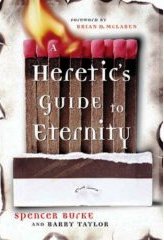
The Heretic's Guide to Eternity asks questions which many people might find to be bordering heretical. Questions like "Is there a future for the Christian church as an institution?", "Is it possible to encounter God's loving goodness outside the confines of religious patterns & practices?" & "Could it be that God's grace is still grace apart from the issues of human sin or innocence?" Many of the questions & thoughts in this book seem to be in the same vein as Mr. Barna's Revolution, just without any boundaries or limits. Heavy questions to be sure, and ones without easy answers. Throughout reading the book, I felt myself challenging my long-held thoughts & beliefs (always a good thing) & trying to really get at the heart of faith. One thing many of us can already agree with is that our culture is moving more to spirituality than religion. However, Mr. Burke says that "Moving beyond religion does not mean we have to live in a moral vacuum of our own creation." Mr. Burke lays out the differences between religion & spirituality as he sees it & then presents more questions about the outgrowth of that than anything else. One could read into it that he is submitting some type of universalism, however, I saw it as simply "thinking out loud". There is a problem with how the Chruch & Christianity sees, relates & interacts with culture & current thought. I think that Mr. Burke is attempting to reconcile that. In this book, Mr. Burke tackles issues of God's grace, institutional Christianity & mystical faith. Some interesting questions are definitely raised and worth digesting, questions which may seem heretical & easy to write-off, but ones which can 't hurt to at least be asked.
In reading about Mr. Burke, I found that he is the creator of this website which receives "200,000 unique visitors a month". I was about halfway through the book when I tried to access the site on my work computer. We have a internet safety system which is overly restrictive & the site would not come up because it was "Tasteless". I decided to just check it out at home. I did later that night & was shocked when I found that it was more than tasteless. Having seen the site Mr. Burke created & hosts I had no desire whatsoever to bother finishing the book.
I felt a bit cheated because I really do feel some of the questions Mr. Burke raises are worthy to be thought through, but I just could not get myself to get past the site, I guess. So, if you venture forward with this book, either do not check out the website, or wait until after your reading.
UPDATE: thanks to comments from Mr. Burke, I realized that I had visited the wrong site entirely (see comments section). I am quite happy to find this out & apologize for sladering the character of Mr. Burke.
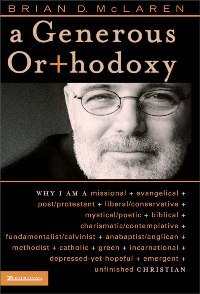
A while ago I wrote a review of Dr. Carson's book Becoming Conversant with the Emergent Church. In that book, Dr. Carson interacts with this work by Mr. McLaren. In my review I talked about things which, honestly, I was not aware. The first book I read on Emergent was Dr. Carson's book. These last couple weeks I finally read both Velvet Elvis & AGenerous Orthodoxy. I have to say, the Emergent conversation is not too far from my own. There are definitely statements which are said, that would be further than I would want to go (at least right now), but there is an awful lot of good going on. It seems to me that Mr. McLaren wishes to take the good from various traditions - Orthodox, Roman Catholic, Mainline, Evangelical, etc. - both in practice & theology & interact with it all. For instance, he takes the "Seven Jesus' He Has Known" - from Pentecostal to Fundamentalist to Catholic - & describes the meaning of salvation from each tradition's vantage point. The Eastern Orthodox church sees incarnation as vitally important - that "Jesus' entry into humanity & history brings God's healing to the human race & all of creation" Each tradition holds a different aspect of Jesus as central. What Mr. McLaren would like to see is a celebration of all these aspects. He writes, "What if we enjoy them all, the way we enjoy foods from differing cultures?...No I am not recommending we throw each offering in a blender, press the 'liquefy' button, & try to create a gray porridge off all cuisines. That doesn't sound appetizing at all. Neither would it be helpful. Rather I'm recommending that we acknowledge that Christians of each tradition bring their distinctive & wonderful gifts to the table, so we can all enjoy the feast of generous orthodoxy - & spread that same feast for the whole world."
This is a challenging book, which will stretch your understanding of how to be a Christian. Love it or hate it, I think it is a book which needs to be read. Whatever "camp" you find yourself in, there is always something we can learn from those in other camps - or even other faiths.
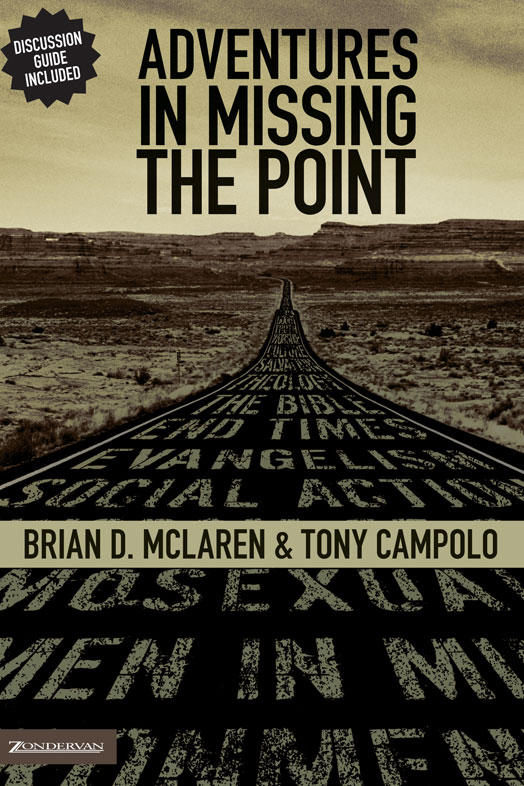
I don’t know about you but I’m not too pleased when somebody corrects me or tells me I’m wrong . . . especially when it’s not obvious to me. You must distance yourself from that mindset if you’re going to dive into “Adventures in Missing The Point: How The Culture-Controlled Church Neutered the Gospel.” According to Tony Campolo and Brian McLaren, Christ–followers have missed the point of the Gospel they are called to share. Believers have mistaken the Bible for just an answer book, seen salvation as celestial fire insurance and equated worship with warm fuzzy feelings. The authors believe the emerging postmodern culture has now provided the church an opportunity to revisit these topics and discover what the Gospel really entails. Topics covered are related to religious philosophy, society and personal spirituality. They include: missing the point of salvation, the Bible and worship and missing the point on postmodernism, women in church leadership, etc. Some of the chapters are more mundane while others scream controversial. In each chapter, one of them presents his perspective and the other then briefly agrees or disagrees in an afterthought. I find it so easy to rely on what I’ve been told to believe as a child or what is widely accepted by the Christian community. The challenge to take an honest look at our beliefs and truly question their origin is not an easy one to make. You must ask yourself, is what you believe biblical or just cultural or a mixture of both? Is it possible to be critical and constructive at the same time?
Some believers may think the authors have “missed the point” by their blatant refusal to bow down at the altar of sacred cow doctrines openly questioning their validity. The authors intention is to stir up some unspoken thoughts in order for them to become a part of a lively discussion rather than provide a theological dissertation. Reading this book was definitely worthwhile! Although I don’t agree with everything they say or how they said it, it certainly provoked me to think a little more about what I say I believe and why I believe — a spiritual necessity for the discerning Christ-follower!
In Becoming Conversant with the Emerging Church, Carson interacts with the key players of the Emergent Church “conversation”. One might think that he, based on his previous writings & ties with TEDS would be very anti-emergent. But in Becoming Conversant, Dr. Carson speaks as one in no camp, but being purely objective. He speaks of positives - things which the universal Church can embrace & come together over; he also offers constructive criticism & things which people should be wary of, regarding the movement. Dr. Carson spends a chapter each on the pros & cons of the Emergent Church. Dr. Carson is insistent that we must continually evaluate & weigh new philosophies of ministry as well as new cultural trends. We must be leery of jumping on the bandwagon of “the new thing” just because it is new & different. He mentions in the opening chapter that in 2003, 1,100 pastors chose to attend the Emergent Church convention over & above the National Pastor’s Convention. “Doubtless many…did not consider themselves part of the emerging church: they were exploring…” We must explore & understand the dynamics of a movement (any movement) before we give ourselves to it. I have spent time looking at websites which have an emergent bent in their opinions & readers. Many, it seems, latch onto the outward trappings of the movement, which I easily could do, but rarely do you see average blogger speak of the philosophical implications of the movement. God said to Samuel, “Do not consider his appearance…The Lord does not look at the things man looks at. Man looks at the outward appearance, but the Lord looks at the heart.” We should take our cue from this passage. Don’t be all caught up in the candles, couches & coffee. What are the real implications of the movement? What is the philosophy behind it? What does it say about Truth? Dr. Carson wants us to think about these things. He lays out the philosophy behind the whole postmodern thinking, so we will understand what we are getting into. He succinctly lays out the implications of postmodernism – good & not-so-good. He next looks at how the Emergent church reacts & critiques postmodernism. Dr. Carson also interacts with Brian McLaren in critiquing his thought from his various publications including, but not limited to A Generous Orthodoxy, & A New Kind of Christian. This is a thoughtful review of the philosophy Mr. McLaren lays out in his writings. Dr. Carson’s discourse on Mr. McLaren’s works was fair, & balanced & very helpful to me. I found myself attempting to guess the response Dr. Carson would have to a certain quoted passage from Mr. McLaren. This was a fascinating read which was witty, insightful & very helpful in trying to understand the Emergent Church. I greatly appreciated the list of Bible passages Dr. Carson listed “to help us in our evaluation.” A great resource for anyone trying to evaluate & get started interacting with the Emergent “conversation”.