Showing posts with label the emerging church. Show all posts

Monday

The Culturally Savvy Christian


I saw this book and was immediately intrigued. I had never heard of Dick Staub before (the jacket cover tells me he has a national radio show that has been on for 15 years), but even so, I picked it up. Am I glad I did. I found this book to be a great read and a very challenging one at that.
At first it seems like an updated version of Niebuhr's Christ and Culture, but I found it to be that and so much more. Mr. Staub interacts with a lot of scripture and to a lesser extent much popular culture. A definition he uses to divide the book into three sections (talking about faith, culture, and the two in relation to one another) is:

The culturally savvy Christian is serious about faith, savvy about faith and culture, and skilled in relating the two.

He opens by talking about being savvy about faith and culture. He (rightly) talks about how many people can quote lines from their favorite movies, TV shows, and/or songs than verses from the Bible. I have found this to be true in my circles and, sadly, in my own life. I must say that I found the opening chapter rather depressing - in the sense that we all let such a magnitude of mindless "amusement" (which Mr. Staub says could be defined as 'to be absent in mind'). He then looks at the soullessness of popular culture (celebrity-driven, money-centered, spread by marketing and sustained by technology), but does not at all suggest turning our backs on culture, but rather, engaging it with the soulfulness of Christ.
He then turns to talking about getting serious about our faith. He bashes what he calls "Christianity-Lite". Too often we are not shedding light into darkness, but living duplicitous lives at church and away from church. Mr. Staub says that we need to have God's deep presence, His transforming presence, as well as His loving presence, and explores each one.
Lastly, Mr. Staub offers action on how to maintain a serious faith and actively engage culture - to transform culture, create soulful culture. We do this by countering culture like aliens, ambassadors, and artists. Mr. Staub is very interested in the hope that serious Christians can not only transform culture but also create culture. He is not interested in our Christian sub-culture, but in leading culture with our art, values and creativity.
I would agree with N.T. Wright who writes a sentence of recommendation for the book - "This is an urgent book for our times - and for our health."

Other books of interest touching on this subject:

Everyday Theology: How to Read Cultural Texts & Interpret Trends, ed. by Kevin VanHoozer
Visual Faith: Art, Theology, and Worship in Dialogue, by William Dyrness
A Matrix of Meanings: Finding God in Pop Culture, by Craig Detweiler and Barry Taylor
Reel Spirituality: Theology and Film in Dialogue, by Robert Johnston
Eyes Wide Open: Looking for God in Popular Culture, by William Romanowski

Listening to the Beliefs of Emerging Churches

I am a big fan of the counterpoints series by Zondervan. I find it interesting and challenging to read viewpoints of people I see eye to eye with as well as people I respect, but do not agree with. Listening to the Beliefs of Emerging Churches is a book in the tradition of the counterpoints series. In this book, Dr. Robert Webber gathers five pastors who are all in the thick of emerging church ministry (emerging ministry being ministry to those 35 years old and under, NOT emergent ministry). All of these pastors are church planters, three are evangelicals and two are emergent.
Each of them were directed to write about three topics and how different aspects of theology effect those topics. The three topics? Scripture, the atonement and the Trinity. The different aspects of theology? Biblicist theology, incarnational theology, missional theology, embodied theology, and communal theology.
Each of the authors writes their chapter and then has each of the other four write a response to it. All five of the writers are familiar with one another, if not good friends, and the remarks reflect that friendly attitude, even when the writers vehemently disagree. The reader can tell that this is a discussion many of the writers have had with one another in person and will continue to have in the future.
Each of the writers have presented very good chapters and both the writers I do not agree with and agree with made me stop and search the Scripture myself and confirm for myself what the Bible says. I also agree with John Burke's initial response to Mark Driscoll's chapter - "I think Mark just made this book worth buying." And although I do agree with that - I would strongly encourage you to read the rest of the book. Especially the pastors you might now agree with. I always find it good to read something that makes me think, makes me reflect on what and why I believe, and each person in this book does that.

Discuss this book on the NextStep Message Boards. Link

Tuesday

Relevant Media Group

If you have not yet discovered Relevant Media Group, please visit their website. These guys are very creative and are doing some wonderful things to reach the twentysomething crowd. They offer quite a few different outlets.

One is their print magazine. I have been a subscriber for around three years and they interact with many of the top leaders and issues of the day. In their Jan-Feb issue, they posed seven church ministry questions to some of the top leaders in the country, including Mark Driscoll, Efrem Smith, Rick Warren, Erwin McManus & Lauren Winner. Articles are written by Mark Batterson, Dan Haseltine, Mark Steele, Rick Warren and Ed Young, among many others. Relevant also deals heavily with the music scene, pop culture and social issues as well.

All the other outlets I will mention are free. They have a weekly e-newsletter called the 850 (because that's how many words are in it) which "features leading authors, speakers and some of this generation's most recognized voices sounding off on current events, cultural happenings and our personal spiritual journeys".

Their website is a site I have up all day and visit multiple times a day, as it is frequently updated. On this site, they publish articles in three areas - God, Life & Progressive Culture. They give news headlines and offer "slices" - basically cultural headlines & news of the weird. for a taste of a slice, here is one from March 21st - A recent survey conducted by The Barna Group, an organization that tracks religious behavior in America, has found that one in every three American adults technically classifies as being "unchurched." Results of the study revealed that 33 percent of adults (a number close to 100 million) have not attended any kind of religious service in the last six months. This is a great site & I highly recommend you visit it.

One of the greatest inventions (in my estimation) is the podcast. I listen to many different ones each week and Relevant has a great one. It is usually about an hour long and they are fun & very funny, but also offer some very good insight sometimes and interview some great authors and thinkers. Over the last month alone, they have conducted interviews with Dan Kimball & Don Miller (spread over two podcasts). I found both to be very well done and interesting. I urge you to give one a try. Sometimes, they are just fun to listen to, and sometimes they offer keen insight. But I find them always well worth the listen. If you do not wish to sit and listen, I would suggest what I do - I listen when I work out in the morning or when I walk my puppy after work. It makes working out much more fun.

Friday

Confessions of a Reformission Rev.

My dad had read Confessions of a Reformission Rev. a couple weeks ago, & I picked it up from his office Monday as I was sick. I could not put it down. This book is great. My dad's brief synopsis was that the introduction (10 curious questions) was worth the price of the book alone. He also felt a love hate relationship with the book because of Mr. Discoll's much talked about vulgarity (known as "Mark the Cussing Pastor" in Don Miller's Blue Like Jazz). I will interact more with that (as well as John MacArthur's recent writing about this later.
The book is Mars Hill Church's autobiography as told by senior pastor Mark Driscoll. I had heard many good things about Mr. Driscoll before, but I was floored by this man's love for Jesus & his passion to serve his Lord. He lets nothing stand between him & the vision that God has given him for Mars Hill Church and the city of Seattle. Just from reading this book I acquired a hunger to get to know Jesus more deeply. Mr. Driscoll's passion for Jesus & drive to have Jesus as the leader of Mars Hill is evident throughout the chapters of this very well-written book.
Mr. Driscoll shares his vision for growing his church and thoughts on general ecclesiology as well. If you are planning on planting a church, you should not even think about it, without having read this book first (in my opinion). Mr. Driscoll is transparent in his telling of the first decade of the church. He shares his personal struggles, encounters with demon-possession, lessons definitely learned the hard way and his sometimes Moses-esque anger at his people.
In an article I came across Thursday, John MacArthur harangues "worldly preachers...[who] adopted boththe style and language of the world", and specifically Mark Driscoll. Dr. MacArthur calls Mr. Driscoll's language "deliberately shocking" & that the style he employs "ought to be clearly marked off limits for the pulpit."
I by no means feel any need to defend Mark Driscoll. However, I have had many people talk about this subject with me. I personally do not think that Mr. Driscoll's "vernacularizing the gospel" is a gimmick, but he is just being himself. I think that there are speakers and people who do this to be thought of as "cool" & in that instance I would agree with John MacArthur (never thought I would say that!). However, I think that there are just some "rough & tumble" guys - men's men who are just being themselves. I think that for others who might consider themselves "scholarly" and "cultured" might be put off by this. There are definitely certain aspects of blue collar life that I do not wish to be associated with - even if it isn't just for blue collar people anymore (country music [sorry - hate it], NASCAR [not sorry - hate it], and "pro" wrestling [i don't want to be vulgar here myself]).
I don't have an answer for this. I know that I personally have no issue with a "cuss word" here or there (just not taking God's name in vain), and realize that as people, we are messy, dirty, sometimes disgusting & earthly creatures. (It is interesting to me too that Jesus was fully human too & this is a point that Mr. Driscoll makes in one of his sermon series entitles Vintage Jesus). I do not think that we should hide our earthlyness, but also, we should not glorify it.
Anywhay I look at it, this book is my book of the year & another will be hard pressed to knock it off.

Wednesday

They Like Jesus But Not the Church

They Like Jesus But Not the Church is almost a vital book to have if you are ministering to people 35 and under. Dan Kimball does so in the area of Santa Cruz, CA and in having many discussions with people he has struck up friendships with (from people who cut his hair, to people in coffeehouses) he shares their insights into the Christian faith.
I have had some discussions with people of late that are a bit confused as to authors and speakers using the words emerging & Emergent. When an author or speaker refers to the emerging church or to emerging Christians (as the subtitle of this book reads, insights from emerging generations), he or she is referring to people 35 years old and younger. So when Mr. Kimball talks about how to reach emerging generations, he is talking on how to Biblically win lost people 35 or younger. The Emergent Church or Christians are something totally different. Emergent is a loosely formed group of friends who generally do not take the Bible as truth and are a new breed of liberal Christians - doing very good things, such as community activism, social justice, reaching out to the poor and needy, but sometimes at the expense of the gospel.
Mr. Kimball is not in that Emergent crowd. He is very intentional & almost apologetic in his writing, making sure he does not come off as trying to cater to or change the gospel so that emerging generations will come to Christ. He is quite conservative theologically, but liberal in his outreach.
The book is broken up into the three sections. The first talks about the differences in the mindset of emerging generations as opposed to other generations. The second section is the largest & exposes six areas where emerging generations have the most distaste for the church (but not Jesus - or at least their idea of Jesus). The third section then tackles how we can bridge the gap while maintaining our integrity towards the gospel.
This book is an invaluable resource for churches. The comments from the people Mr. Kimball interviewed speak to a deep hunger that this generation has for spiritual truth & we can give them that truth, if we change some of our methods (not beliefs). Mr. Kimball has a forthcoming book which is speaking directly to the people who he describes in this books as those who like Jesus but not the Church called I Like Jesus But Not the Church. He also speaks about a curriculum that will be available in the Fall of 2007. I eagerly await both.

Friday

Sex God

Sex. God. What?

Be honest here for a moment: when you think about sex or God, chances are you’re not thinking about them at the same time, let alone relating to one another.

As created human beings, we know the two subjects are interconnected; we just don't have the right words to communicate how they’re related. Enter Rob Bell, author of Velvet Elvis, who says, “To make sense of the one, we have to explore the other.” Seems simple enough to agree with and understand but it’s not. It’s something deeper about how we were made to relate to each other, which inevitably leads to our Creator.

With chapter titles such as "God Wears Lipstick," "Leather, Whips, and Fruit," and "Whoopee Forever," Bell’s conversational style will appeal to young and old, single, dating, married or celibate. He shares common sense painted with a different paintbrush. His chapter “Worth Dying For” was one of my favorites. With the Spirit moving, it softened my hardened heart and attitude. I’ll share this chapter’s information with the two women in my life, (my wife and daughter).

Also “Under the Chuppah” was a close second as he shared his knowledge of the Jewish wedding traditions and how marriage today is not as sacredly observed. He did catch me off-guard several times, but his dissertation on God and our environment surprised me the most. It wasn’t out of place, but I felt it was too long and he was definitely on his soapbox. As always, his endnotes are full and flowing over with tidbits to enhance the learning experience.

What do sex and God really have to do with each other? That is what this book is about.

Pick up a copy here for 20% off.

posted by Dale Lewis

Monday

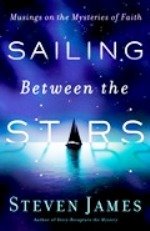
Sailing Between the Stars


There is no such thing as a bad question and not every question has to have a well-defined answer. "Everywhere you look in Christianity, you see mysteries piled upon mysteries," writes the author in Sailing Between the Stars: Musings on the Mysteries of Faith. His premise is we don’t need to be so quick in securing an answer for every question asked. Our knowledge is finite . . . why do we pretend we know everything about anything when it comes to spirituality?

Through his captivating, conversational style, poignant stories and poetry, his challenge for the traveling pilgrim is to soak in the mysteries of faith. For some of us, that way of thinking is not in our comfort zone. Yet it’s important to be reminded, we will not lose our salvation by asking questions that may not have a 3-point dissertation as an answer.

Simply put, he has a way with words . . . drawing the reader into a more intimate glimpse of “what it really means to walk this paradoxical, painful, curious journey of believing in God’s Story.” His new favorite word is “agatholkakological” which means consisting of both good and evil . . . human beings being human. That’s you and me!

His musings include these odd but intriguing titles within the twenty chapters: “joy on the front of my pants,” “chewing on God,” and “thoughts on dung and grace.”

He challenges Christ-followers to become more comfortable with a faith full of truth and mystery. We serve a God who’s illogical, unreasonable and not stuck in our limited sandbox of understanding . . . but who is also incredibly and unmistakably true!

The bottom line of Sailing Between the Stars is that by definition God is bigger than our definitions. That's attractive, intriguing and a little bit unsettling to the all of us.

I read an advanced reading copy from uncorrected proofs but it didn’t matter in the least. His collection of random and not-so random musings is easy to read. I look forward to the day I can meet him face to face and thank him for sharing his heart.


Pick up the book here for 20% off.

Friday

Velvet Elvis

Rob Bell, pastor of Mars Hill Bible Church, is a creative communicator and offers an intriguing “reintroduction” to the Christian faith. He sees the church desperately needing to be a haven of community and forgiveness . . . even doubts! His church hosted an evening where doubters were invited to ask their most challenging questions (that don’t have the easy answers) like “Either God is in control of everything and so all the crap we see today is part of His plan, (which I don’t want to accept), or it’s all out of control,(which sucks too). What’s up?” Bell follows this up with “Questions bring freedom. Freedom that I don’t have be God and I don’t have to pretend that I have it all figured out. I can let God be God.”
I’m all for asking questions and participating in healthy dialogue, but I’m not as quick,(as some would be), to toss out my childlike faith just because our culture is continually changing! Biblical absolutes are still needed in this day and age.
Although his words are strong at times and his approach straightforward, I’m somewhat surprised by this whirlwind of controversy over Velvet Elvis. As a reader, I believe you’ll either love it or hate it . . . both with great passion. Like players lined up on opposing sidelines waiting to do battle on the field, the tension between “cultural” Christianity and “biblical” Christianity is causing great confusion for many believers.
There is a definite danger in being cutting edge if we become nonchalant with the authority of God’s Word—the Holy Bible.
Bell often uses Jewish teachings, rabbinic wisdom and stories as illustrations in Velvet Elvis. This inside look at the times and culture of Jesus is fascinating and worth the price of the book.
I don't agree with all of it, but it certainly made me think and ask questions like “What it means to live as a Christian here and now, in this place, at this time?” in contrast to Bell’s suggestion of asking “What it means to be a Christian here and now, in this place, at this time?”——because what it means to be a Christian, i.e. how one becomes a Christian as taught in the Bible, hasn’t changed because God’s Word has not changed!
The challenge, for most of us, is to read it with an open mind and humble spirit seeking biblical truth. Each one of us, as a Christ-follower, is involved in the endless process of working out how to live as God created us to live. It is just not enough to live in the past of the "good old days" if we want to make a difference today!
Within the company of contemporary peers, (Spencer Burke, Brian McClaren, Erwin McManus), Rob Bell speaks as a voice in today’s culture.

You can buy this book at NextStep Resources for 20% off.

This review was submitted by Dale Lewis who works at the EFCA & attends Hope Church in Oakdale, MN.